Reviews
Part of Retirement rules quietly decide what a retirees' venture can risk
Ideas for retirees, one decision at a time
Ideas for retirees guide arranged as a sequence: what to settle before starting, what to test first, what to buy last, and how to keep an exit available.
Most guidance for starting a venture after a career assumes you want something large, but many do not. The useful sequence is not the standard one.
This page gives it in the order decisions arrive: what to settle first, what to test, what to buy, and how to keep the door open.
Decide what the venture is for first, because every later decision depends on it.
What to take away
- Settle the purpose before the idea. A venture meant to occupy a week and one meant to produce reliable income are different businesses even when they sell the same thing.
- Test with the network you already have before spending anything, because that network is the asset a career leaves behind and it does not last forever.
- Keep an exit reachable at every stage. The venture should be something you can stop without loss, not something that has to be escaped.
Step one: name what it is for
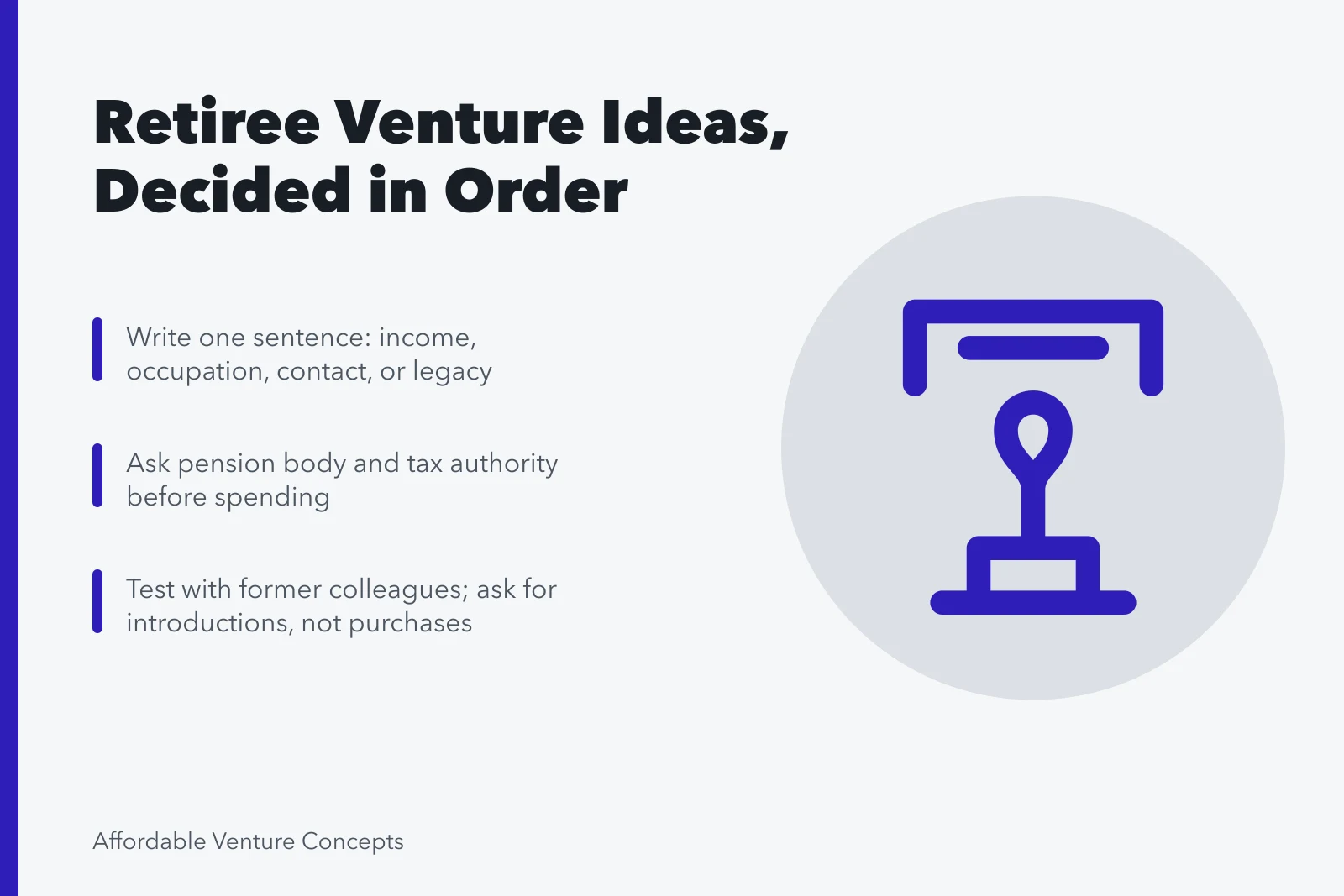
Write one sentence saying what the venture is meant to produce. Reliable income, occupation and structure, contact with people, a use for what you know, or something you can hand on. These pull in different directions, and a venture designed for one will disappoint if judged by another.
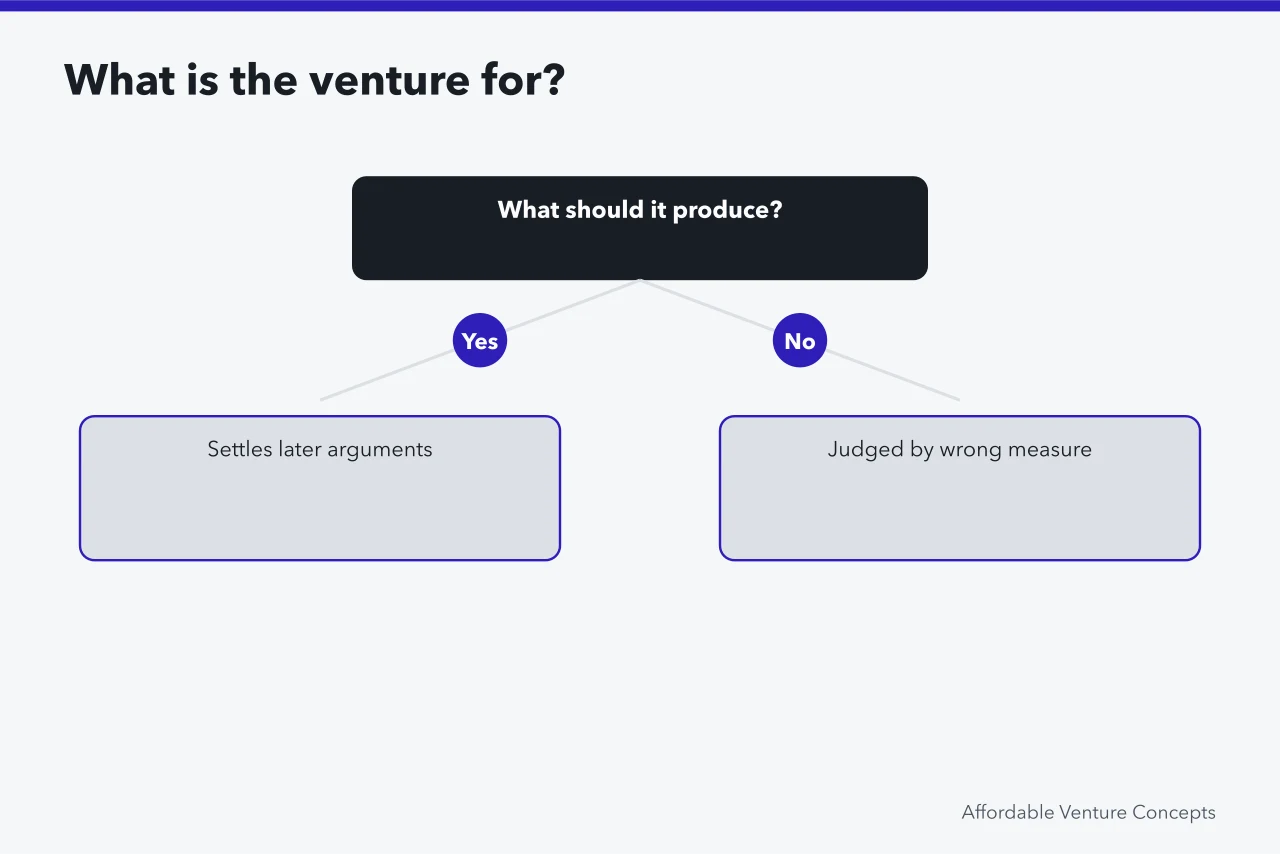
The retirees pillar works through the consequences of each. The point of doing it first is that it settles arguments later: whether to take a job you would enjoy at a lower price, whether to accept irregular income, whether to grow at all.
Step two: settle the money questions with the bodies that hold the answers
Two questions have to be asked of institutions rather than of a website. Whether income affects any pension, benefit or entitlement you receive, which only the body paying it can answer. And how a second source of income is treated for tax, which depends on your country and sometimes on the structure you choose.
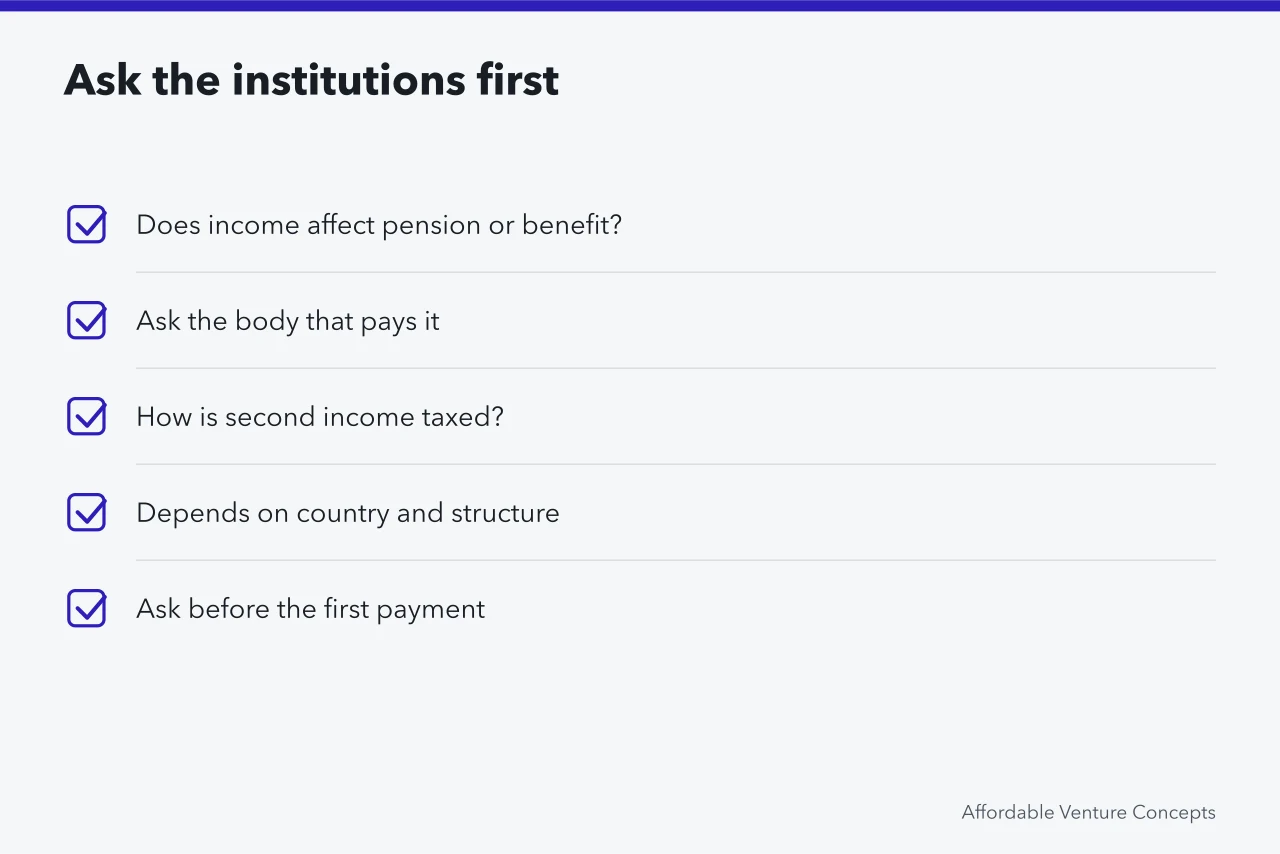
The IRS center for self-employed taxpayers is one system's account of what self-employment adds to a return, and it is a fair illustration of the kind of thing to look for in your own. Ask before the first payment, not after the first year.
Step three: choose the shape before the structure
Deciding whether to trade as an individual or through a registered entity is a real decision with consequences for liability, tax and paperwork, and it is one people rush. The SBA's explanation of how business structures differ is a clear description of the trade-offs, and the names differ by country while the trade-offs do not.
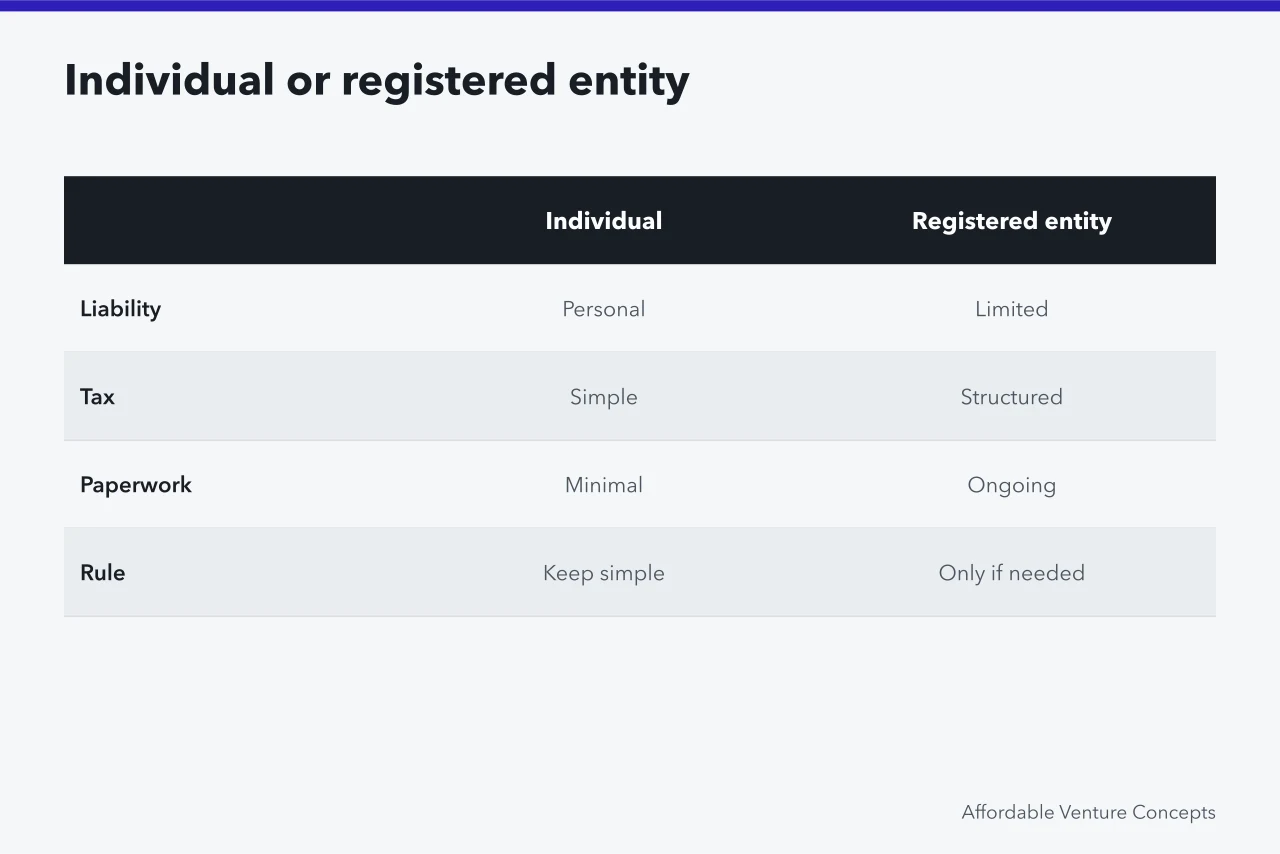
The general rule is to keep the structure as simple as the work allows. Complexity added early is complexity you maintain for years, and it rarely earns its keep in a venture designed to stay modest.
Step four: test with the people who already know you
The largest advantage here is a network of former colleagues, clients and suppliers who will take your call, together with a track record that answers the question every buyer is silently asking. That combination is the hardest part of a business to acquire, and you already have it.
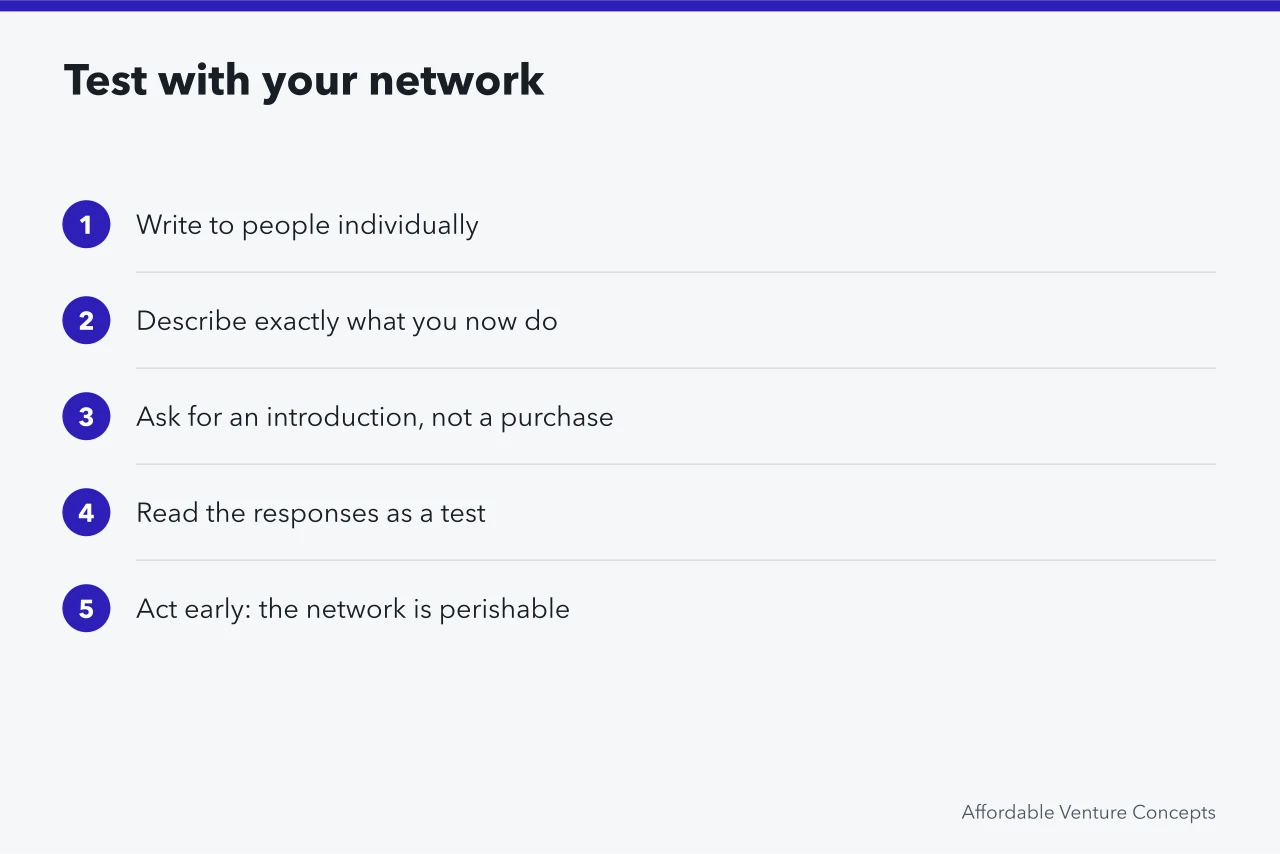
Use it as a test rather than as a launch. Write to people individually, describe exactly what you now do, and ask for an introduction rather than a purchase. The responses tell you whether the offer makes sense to people who understand your field, and they tell you quickly.
The network is perishable. Contacts move, retire and forget, so this step is worth taking early rather than after a year of preparation.
Step five: buy nothing that cannot be undone
The order of spending is the one the startup budget guide sets out, and it matters more here, because the money at risk is frequently savings rather than salary. Spend time before money. Spend on permissions once someone has agreed to pay. Rent or borrow equipment while learning. Sign nothing with a term longer than your certainty.
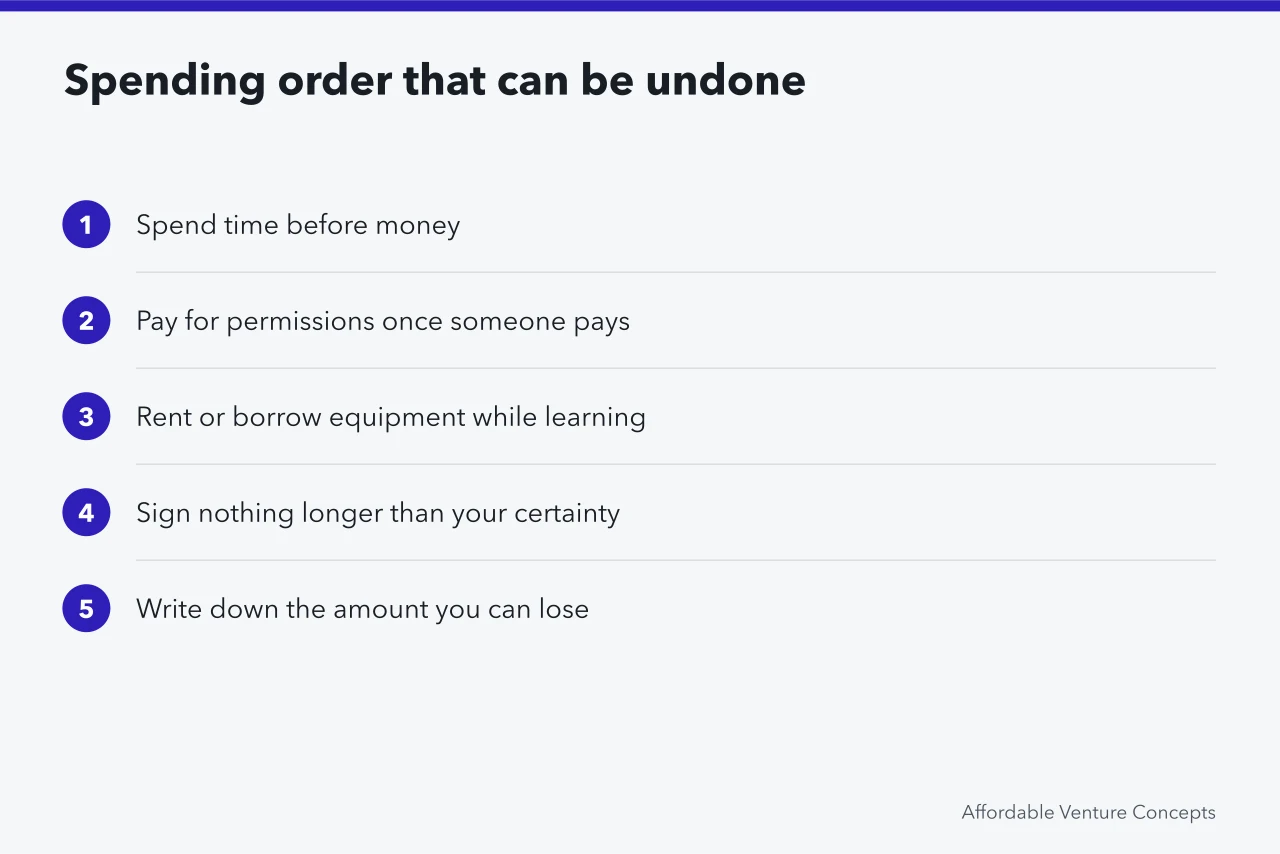
The split that matters is between the cost of being ready and the cost of staying alive, and the second decides outcomes. A venture funded from savings has a further rule of its own: decide in advance the amount you are prepared to lose entirely, write it down, and treat the rest as untouchable.
Step six: price for the work, not for the hour
Someone who has been paid a salary for decades usually has no instinct for pricing, and the common error is to price low because the work feels easy. Work that feels easy to you is the work you are best at, which is precisely what a buyer is paying for.
Price the piece of work, not the hour, when you can. The skill-based guide explains why hourly rates punish the experienced and why a defined deliverable is the rung to reach for.
Where the buyer is an organization, expect your price to be compared with its internal cost, not with what you used to earn.
Step seven: design the ending while it is hypothetical
Every venture ends, and the ones that end well were designed to. Decide now what would make you stop: a change in health, a change in what you want, a level of income no longer needed, or simply having had enough.
Then check that stopping is actually available. Standing commitments to customers, staff, leases and finance all remove it.
A venture that can be wound down in a month, handed to someone else, or paused for a season is a different proposition from one that has to be escaped, and the difference is decided in the first year.
The part-time pillar covers the version many people want instead of a full stop: a venture deliberately sized to a few hours a week.
Common questions
Is it a problem if the venture only buys me a job?
Only if you wanted something else. A well-paid, enjoyable job you control is a good outcome, and it is what most consulting and advisory work is. It is a problem only if you intended to build something saleable, because that needs documented systems and other people's hands.
Should I use savings?
Only an amount you can lose without changing how you live, decided in advance and written down. The venture should never be able to reach past that number.
How long before I know whether it works?
Long enough for the network test to run and for a few real customers to pay twice. That is usually months rather than weeks, and it is a reason to keep fixed costs near zero at the start.