Industry
Part of Retirement rules quietly decide what a retirees' venture can risk
Reading ideas for retirees metrics without fooling yourself
Ideas for retirees metrics for a venture where growth may not be the goal: measuring energy, commitment, the stopping cost and whether the purpose is being met.
Standard business measurement assumes growth is the objective and reports progress against it. For a venture built after a career that assumption is often wrong, and measuring the wrong thing produces a venture that looks successful and feels like a mistake.
What follows is a short set of measures aimed at a different question: is this still doing what I started it for, and can I still stop? The retirees pillar treats naming that purpose as the first decision of all. No target values appear, because there are none.
What to take away
- Measure against the purpose you named at the start, not against growth, or you will optimize something you did not want.
- Two measures matter more here than anywhere else: what it would cost to stop, and how the work is affecting your energy.
- Everything here fits on one page a month and needs no software.
The measures
| What to measure | How to take it | What a change tells you |
|---|---|---|
| Hours worked | Start and stop times written on the day | Whether the venture is expanding past what you agreed with yourself |
| Energy after work | One mark a day, on a fixed simple scale you invent | The earliest signal that the shape needs changing |
| Committed hours | Hours already promised for the month ahead | How much freedom you actually have left |
| Stopping cost | Everything that continues if you sell nothing next month | Whether the exit is still available |
| Capital inside the business | Stock, equipment, and work done but unpaid | How much of the reserve the venture is holding at any moment |
| Cash gap | Days between finishing work and being paid | Whether the venture funds itself |
| Repeat share | Share of this month's work from existing customers | Whether selling starts afresh each month |
| Purpose check | One written sentence a quarter | Whether it still does what you started it for |
The stopping cost, taken monthly
This is the measure most specific to this stage, and the one no standard advice includes. List everything that would continue if you stopped selling tomorrow: customer commitments, standing arrangements with other people, leases, finance, subscriptions, and anything a customer is relying on. Add the money it would take to unwind each.
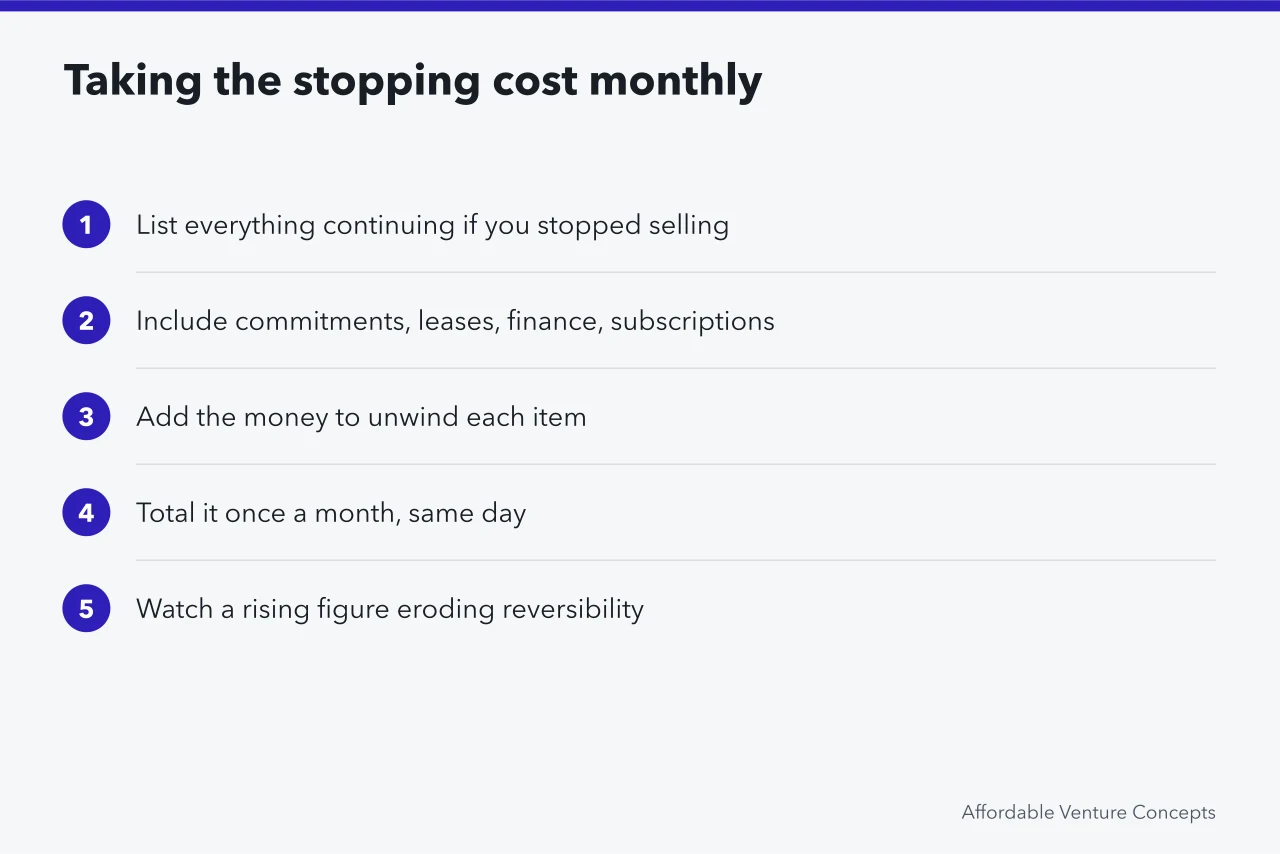
Take the total once a month, on the same day. A rising figure is the venture quietly removing your ability to stop, and it rises through decisions that each look reasonable. Reversibility is worth protecting on purpose rather than by luck, and this measure is how you notice it eroding.
Energy, measured honestly
Keep one mark a day for how the work left you feeling, on any simple scale you invent and keep consistent. It sounds unserious, and it is the most useful line on the page.
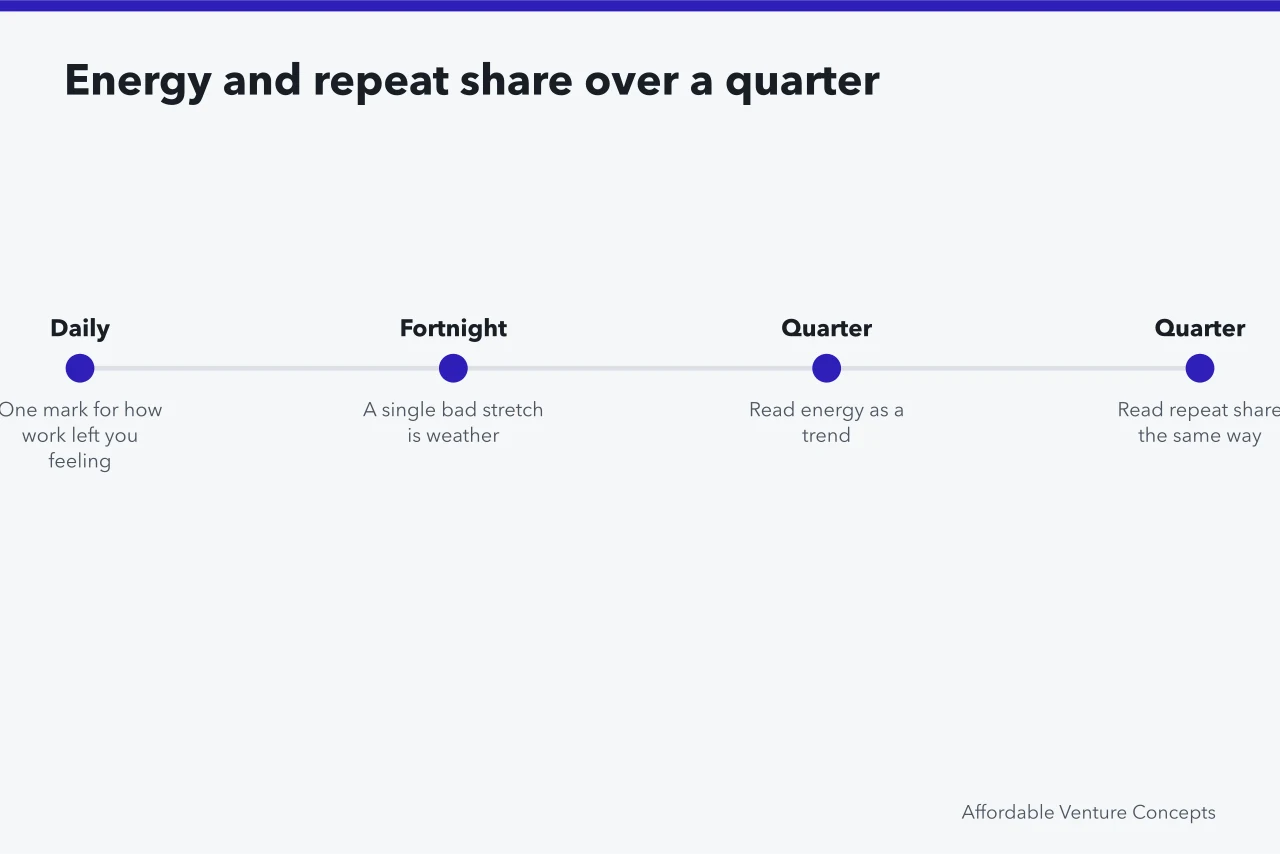
A change in energy shows up months before it reaches the accounts. That signal should change what you sell, when you sell it, or how much.
Read it as a trend over a quarter. A single bad fortnight is weather.
Read the repeat share the same way. When it rises, selling turns into scheduling, and the local service pillar describes how a round of returning customers forms and what keeps it.
Capital inside the business
Take the total once a quarter: stock on hand, equipment bought, and work delivered but not yet paid for. This is money that is neither spent nor available, and it grows without anyone deciding it should.
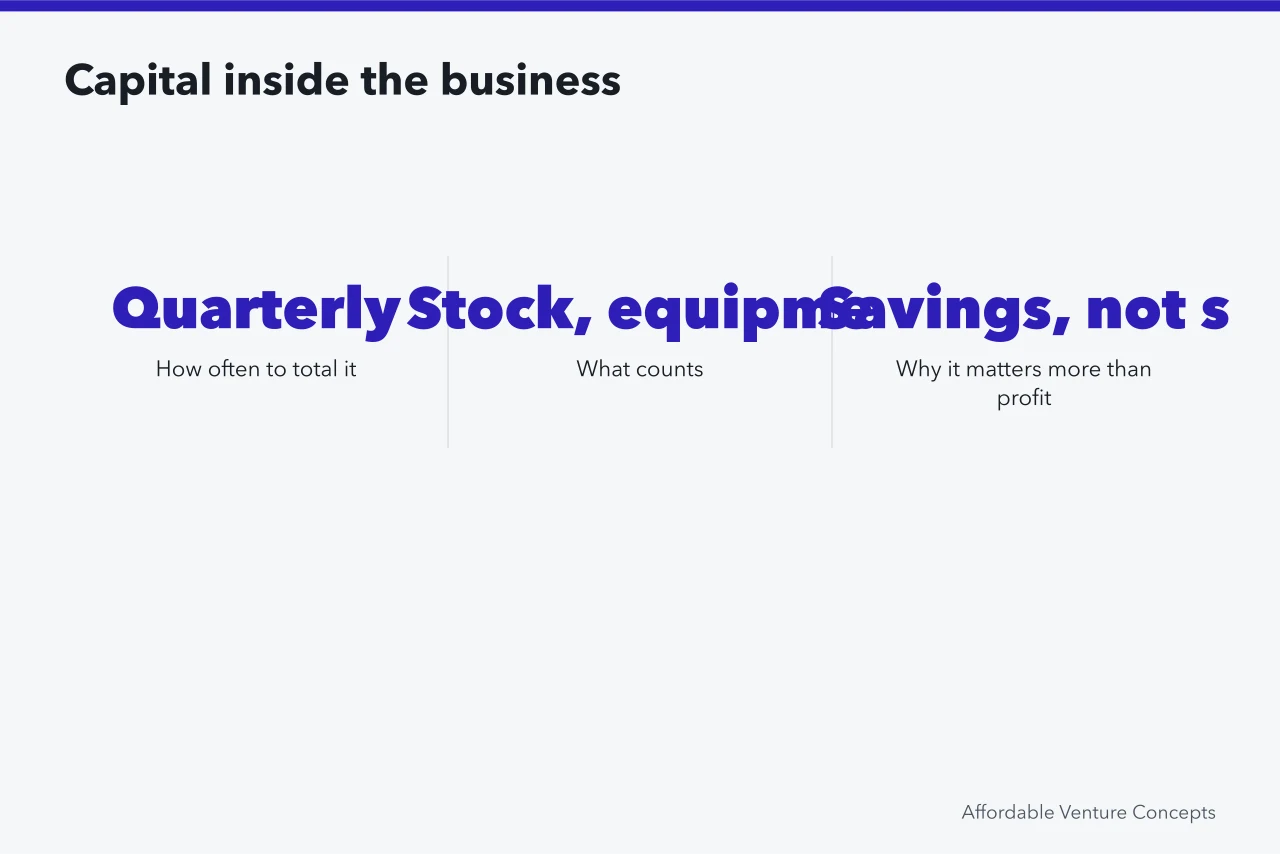
Where the money behind the venture is savings rather than salary, this number matters more than profit does, because savings are not replaced. The SBA's page on managing the money side of a business is a reasonable description of the discipline, and the concern here is that the number is known rather than assumed.
Cash timing, not just totals
Note for each job the date the work finished and the date the money arrived. The average gap, and whether it is lengthening, tells you whether the venture pays for itself or is being carried. The profit model guide explains why some ways of charging hold far more capital, and wait far longer to be paid, than others.
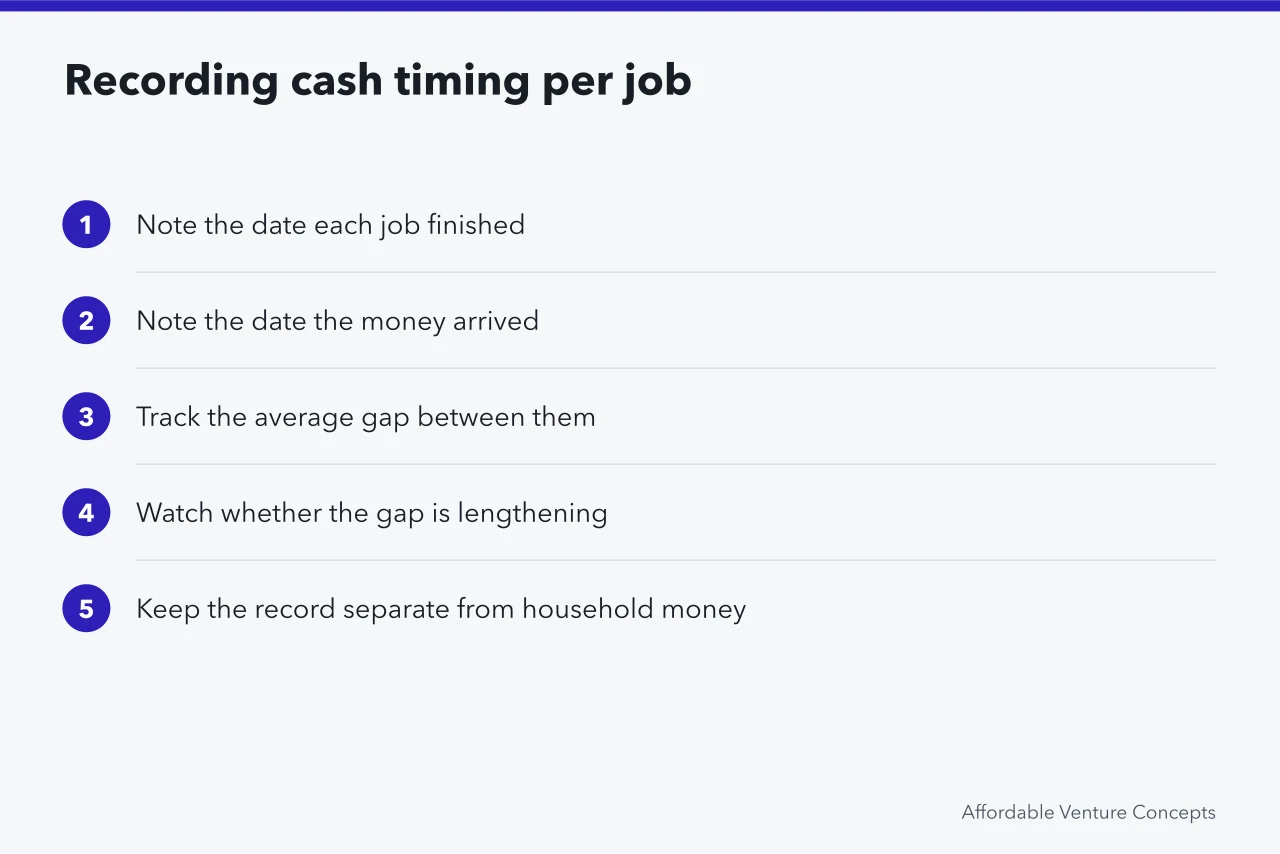
A gap that is widening is the earliest warning of a customer in trouble, and it arrives before any conversation does.
Keep the record separate from household money from the first payment. The IRS list of the records a business is expected to keep is a fair minimum, and the measures on this page sit on top of that record rather than replacing it.
The purpose check
Once a quarter, write one sentence: what this venture is for, and whether the last three months served it. Compare it with the sentence you wrote at the start.
Three outcomes are worth acting on. If the sentence changed, the venture should change with it.
If the sentence stayed the same but the last three months did not serve it, adjust something specific. That is usually the kind of work accepted, not the amount. If you cannot write the sentence at all, that is the finding.
Reading the page
Fill it weekly, read it monthly, act quarterly. Three things deserve an immediate response rather than a wait: a rising stopping cost, a falling energy trend, and capital inside the business approaching the amount you decided you could afford to lose. The startup budget guide explains why the last of those closes more ventures than any single cost does.
Common questions
Is measuring energy really a business metric?
Here, yes. If the purpose of the venture includes how you spend your weeks, then how the weeks feel is an outcome, not a distraction from one.
Should I compare my numbers with other people's?
No. There is no benchmark that accounts for what you want the venture to do, and a borrowed figure will make a well-fitted venture look like a failing one.
What if the numbers say stop?
Then stopping is the correct outcome, and a venture designed to be stoppable makes it a decision rather than a crisis. Finish what is owed, tell customers, close the accounts, and keep the record.