Features
Part of Which pressures shape a students' venture: permission, calendar, contracts
Ideas for students questions: what people ask and what is true
Ideas for students questions answered plainly, from permission and the calendar to money, ownership and what happens to the venture at graduation.
The questions below are the ones that actually get asked, grouped by when they arrive. Where the honest answer depends on your country, your visa or your institution, that is what is written, together with who to ask. A confident answer to a question that has no general answer is worse than no answer at all.
What to take away
- Three questions have to be answered by somebody other than a website: your right to work, your institution's rules, and the terms on any funding you receive.
- Most calendar questions have the same answer, which is to sell something with an ending in it.
- One question belongs in every group, and it is whether the offer in front of you is a business at all.
Before you start
Am I allowed to run a business while studying?
It depends on your immigration status if you are on a visa, your institution's rules, and sometimes your funding terms. Self-employment is often treated differently from employment.
Ask your international student office and read the official immigration guidance for the country you study in. The guide to ideas for students treats this as a gate, and it is the right way to hold it.
Do I need to register anything?
It depends where you are and what structure you use. The SBA's page on choosing a business structure shows the kinds of choice involved in one system, and the trade-offs it describes generalize even where the names do not. Find your own country's register and ask before assuming.
Should I wait until after graduation?
There is no general answer. What is true is that the campus network, the cheap access to people willing to try things, and the low cost of failure are all temporary advantages, and they are the reason to start now if you are going to.
About the calendar
How do I run something through exam periods?
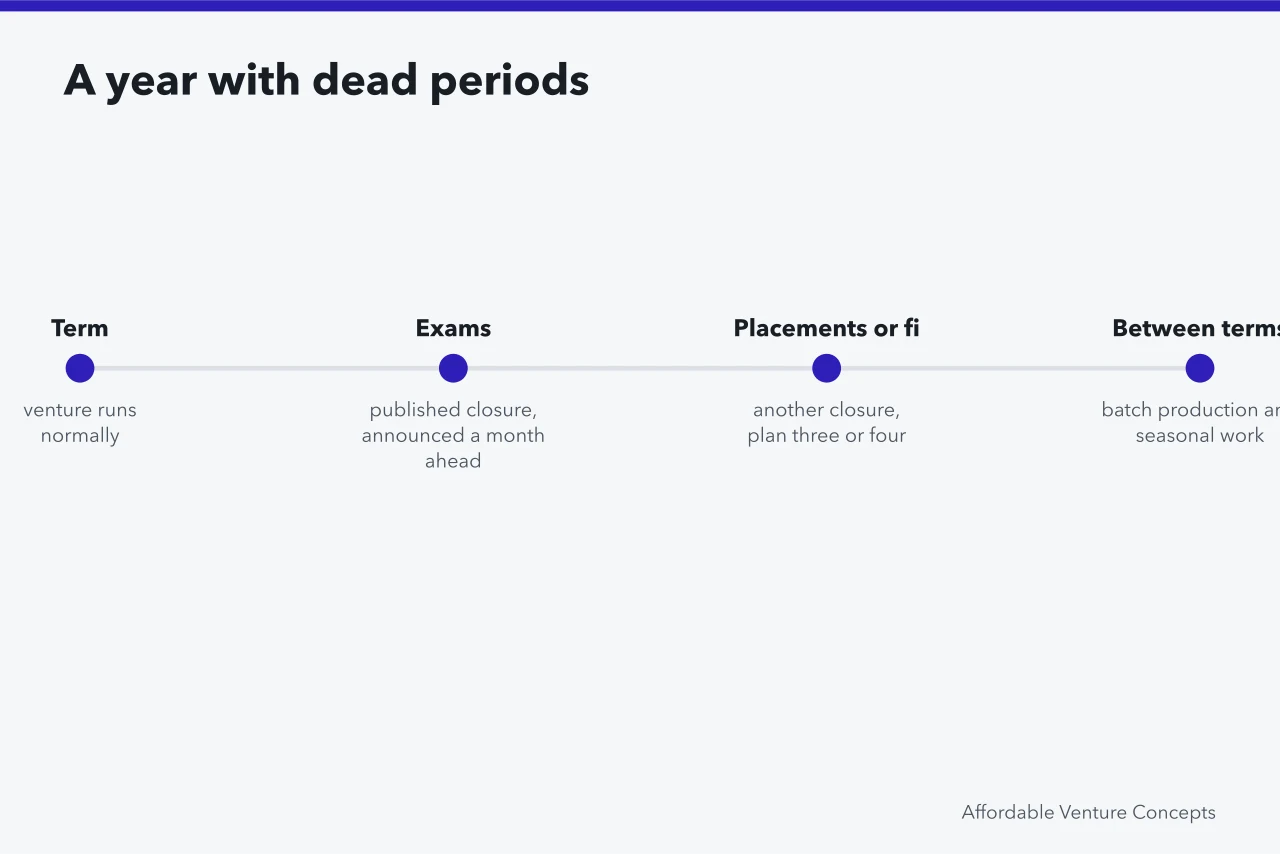
Usually by not running it. Build an ending into what you sell: blocks with a final session, batches with a delivery date, or a published closure announced a month ahead. Anything with a continuing obligation will break, and it will break at the worst moment.
What if my course has placements or fieldwork?
Treat those as another closure, and design the venture around a year with three or four dead periods rather than two. The guide to part-time ideas covers sizing a promise to the hours that survive a bad week, which is the general form of the problem.
Is it worth starting something that only runs between terms?
Yes. Batch production, seasonal work and project work all fit that pattern, and a venture that runs cleanly for four months a year is better than one that runs badly for twelve.
About ownership and equipment
Who owns something I built as part of a course?
Possibly not you alone. Institutions commonly have policies covering work made under their supervision, funding, or facilities. Those policies exist for when something turns out valuable. Read the policy before the venture and the coursework touch.
The US Copyright Office's account of what copyright covers and who holds it explains why the maker is not automatically the owner.
Can I use university software or labs?
Assume not for paid work until the policy says otherwise. Licenses granted for study are frequently limited to study, and using one commercially can breach both the license and the student rules.
Can I trade under any name I like?
Only if it is genuinely free. Check before printing anything, because changing a name after a term of use is expensive and confusing to customers.
About money
Do I have to report what I earn?
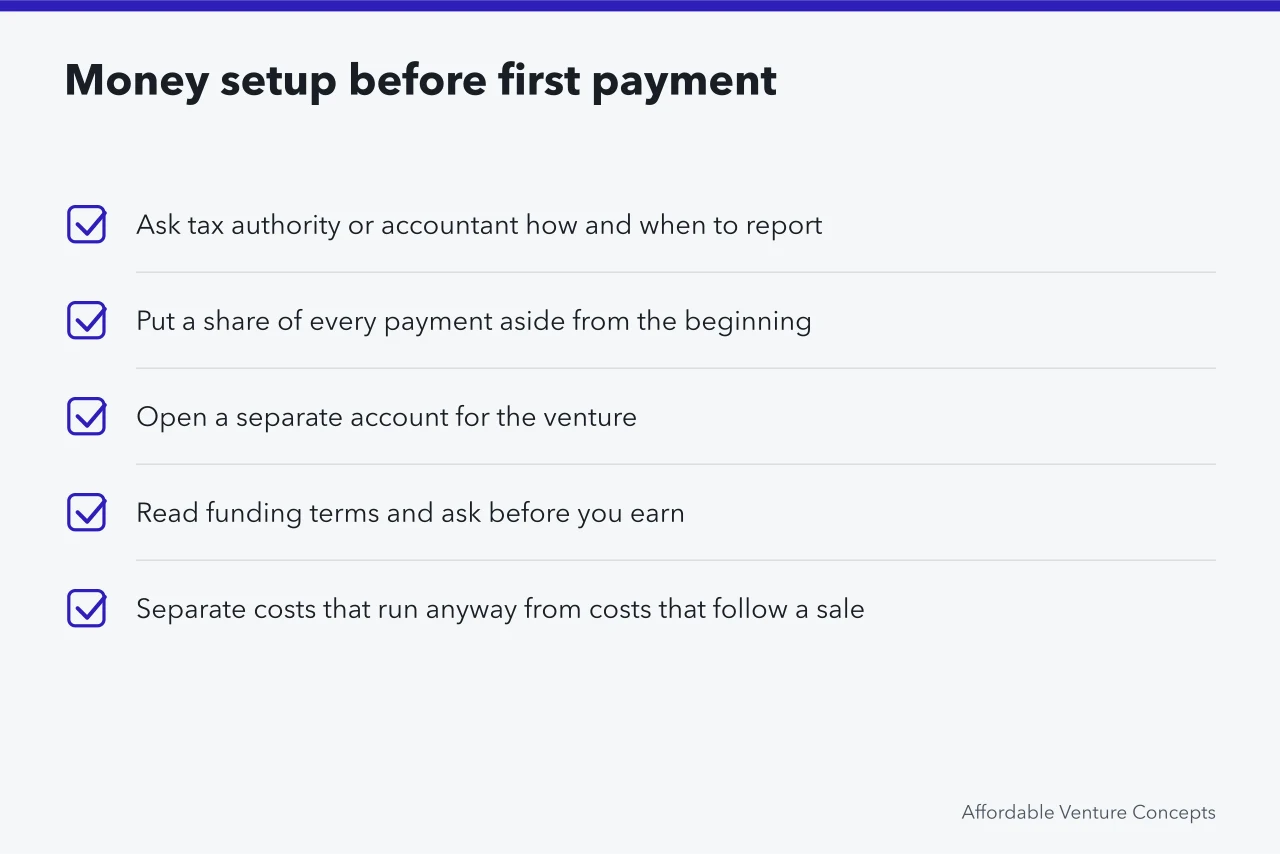
Almost certainly, somewhere, and student status rarely changes that. How and when varies by country. Ask your tax authority or an accountant before the first payment rather than after the first year, and put a share of every payment aside from the beginning.
Do I need a separate account?
Do it regardless of whether it is required. It is what lets you see whether the venture pays for itself, and it turns the year end into a report rather than an excavation. The guide to ideas by startup budget rests on the same separation: costs that run whether or not anyone buys, against costs that follow a sale.
Will earning affect my student funding?
Sometimes, and only the body that pays it can tell you. Read the terms and ask, before you earn rather than afterwards.
About the offer in front of you
Is this a business or a recruitment structure?
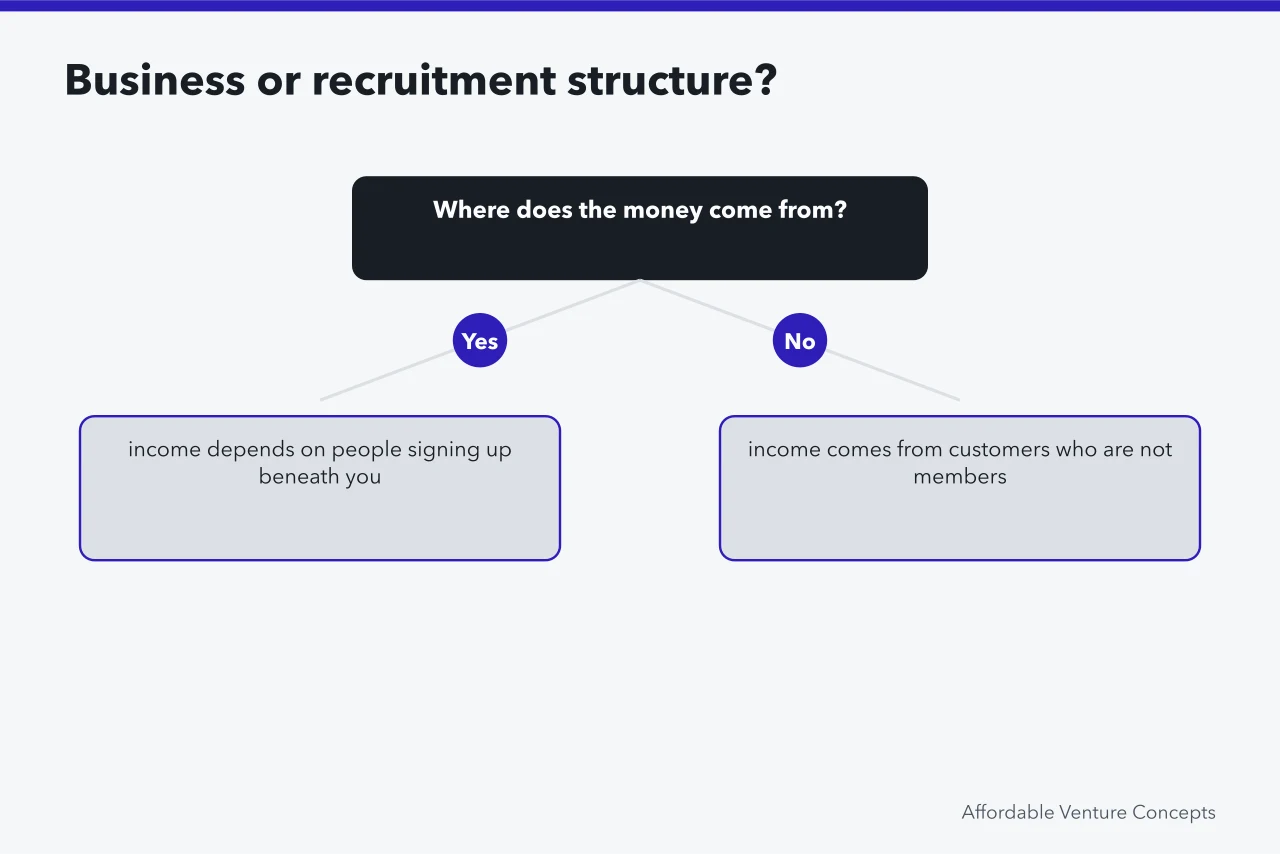
Ask where the money comes from. If income depends mainly on people signing up beneath you rather than on customers who are not members, that is your answer. If there is a fee to join, a starter kit to buy, or a product that is a course about selling the course, treat those as answers too.
The FTC's consumer guidance on multi-level marketing and pyramid schemes describes the pattern. Students get approached more than most, because a dense network of friends is exactly the asset these structures consume.
About afterwards
What happens to the venture when I graduate?
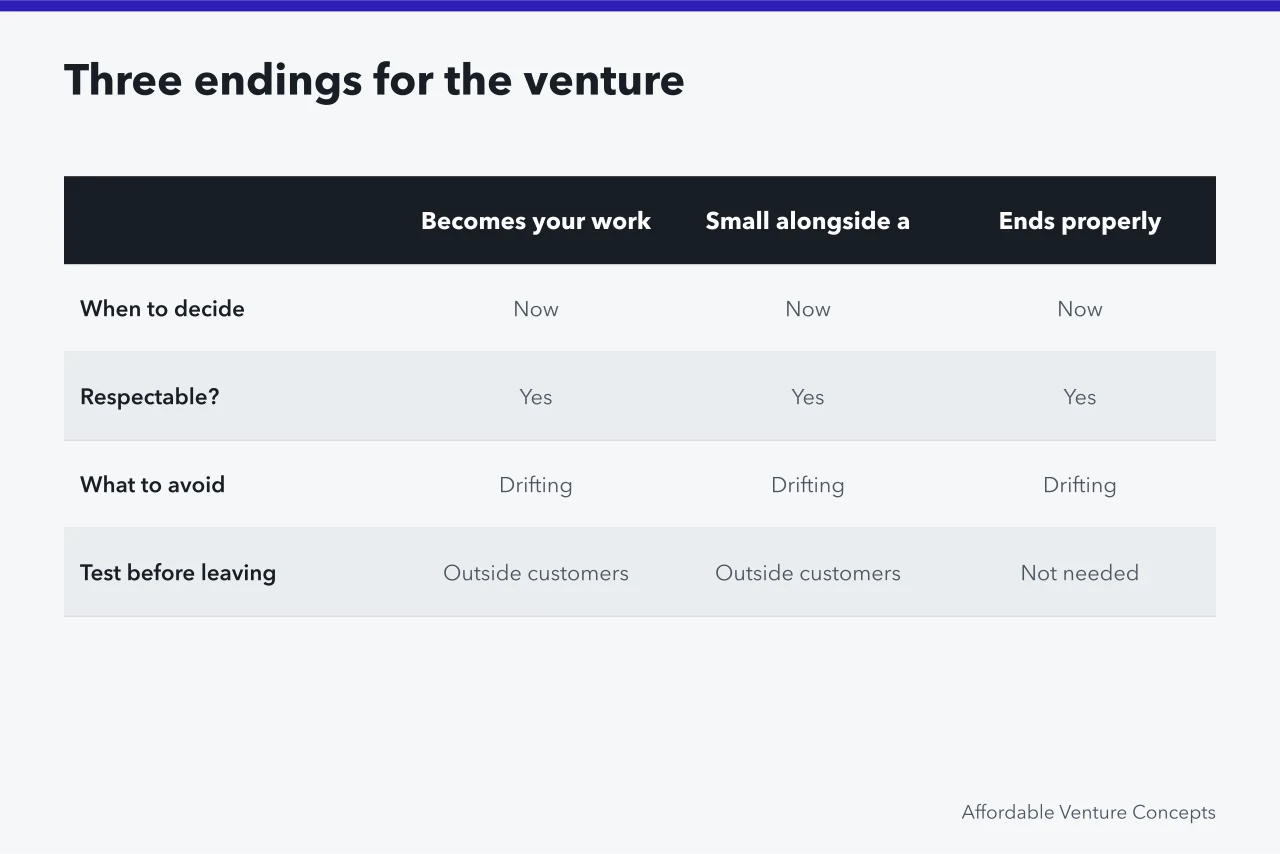
Decide now, while it is hypothetical. It becomes your work, something small alongside a job, or it ends properly. All three are respectable. Only drifting is not.
If you intend to keep it, the guide to ideas by skill covers moving from selling your hours to selling something defined. That change makes a venture worth keeping.
How do I test whether it survives without the campus?
Take on customers with no connection to the university a year before you leave, and see whether the venture still functions. Leaving usually converts a set of free or cheap resources into paid ones, so price the venture as though it already had.
Common questions
Which question should I answer first?
Whether you are allowed to do this at all. Everything else is wasted effort if the answer is no, and the answer takes one conversation to obtain.
Why does this page keep saying to ask somebody?
Because the answers genuinely differ by country, institution and funding body, and a page that guessed would be confidently wrong for most readers.
Is a venture that fails a waste of a year?
Not if it taught you how to find a customer and ask for money. That is the part that transfers to everything afterwards.