Features
Part of Which pressures shape a students' venture: permission, calendar, contracts
Notes on ideas for students from the field
Ideas for students guide organized around the academic year: what to settle before term one, what to attempt in each phase, and what to decide before graduation.
A venture run alongside a degree fails for a reason unrelated to the idea: the academic year is not a flat surface. It has weeks where nothing else can happen and weeks with more free time than you will ever have again.
At the end, a hard edge can change your address, status, and equipment all at once.
This guide is arranged around that year, because the sequence matters more than the choice of venture.
What to take away
- Three permission questions come before any idea, and getting one of them wrong can cost far more than the venture is worth.
- Design the venture to be paused, because it will be, twice a year, whether you plan for it or not.
- Decide what happens at graduation while it is still hypothetical, because that is the only time you can decide it calmly.
Before anything else: three permissions
Your right to work and to trade. If you are studying on a visa, what you may do is defined by its conditions, and self-employment is often treated differently from employment. The rules differ by country, by visa type and sometimes by the stage of your course. Ask your institution's international student office and read the official immigration guidance for the country you are in. Do not rely on another student, and do not rely on this page.
Your institution's rules. Most have policies on running a business, on using their equipment or network for it, on trading on campus, and on who owns work created as part of a course. That last one catches people whose venture grows out of a project. Read the policy before the venture touches any coursework.
Conditions on money you receive. Scholarships, bursaries and student support sometimes carry terms about outside income. Read them, and ask the body that pays before you earn rather than afterwards.
The guide to ideas for students treats these three as gates rather than paperwork, and that is the right way to hold them: a no from any one of them changes the plan.
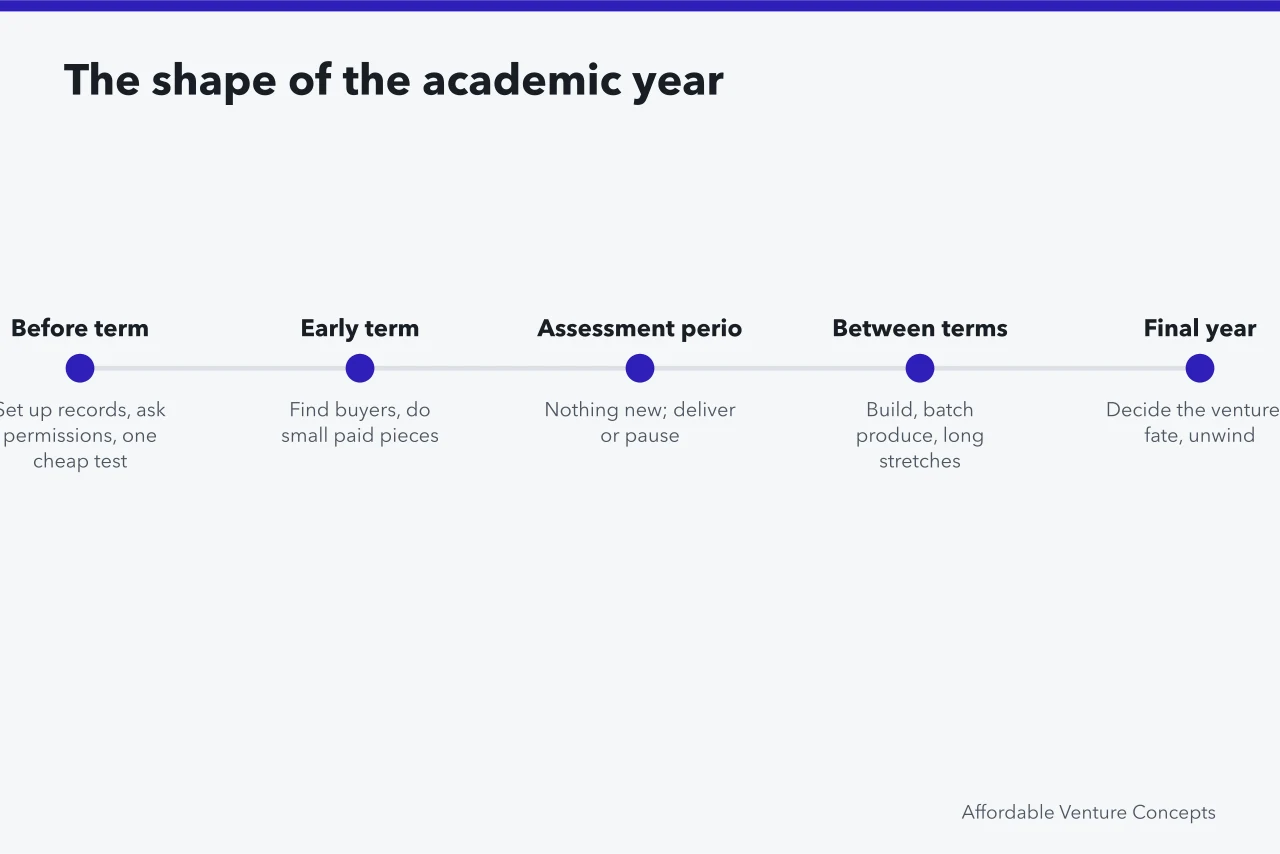
The shape of the year
| Phase | What it is good for | What to avoid starting |
|---|---|---|
| Before term begins | Setting up records, asking permission questions, one cheap test | Anything requiring weekly delivery |
| Early term | Finding buyers, doing small paid pieces of work | Long commitments that run into assessment |
| Assessment periods | Nothing new. Deliver what is already promised, or pause | Any new customer, any new deadline |
| Between terms | Building, batch production, the work that needs long stretches | Anything that must continue once term restarts |
| Final year | Deciding what the venture becomes, and unwinding what it should not | New fixed costs of any kind |
The table is the whole method. Most student ventures die because something started in a good week was still running in a bad one.
Start with a test, not a build
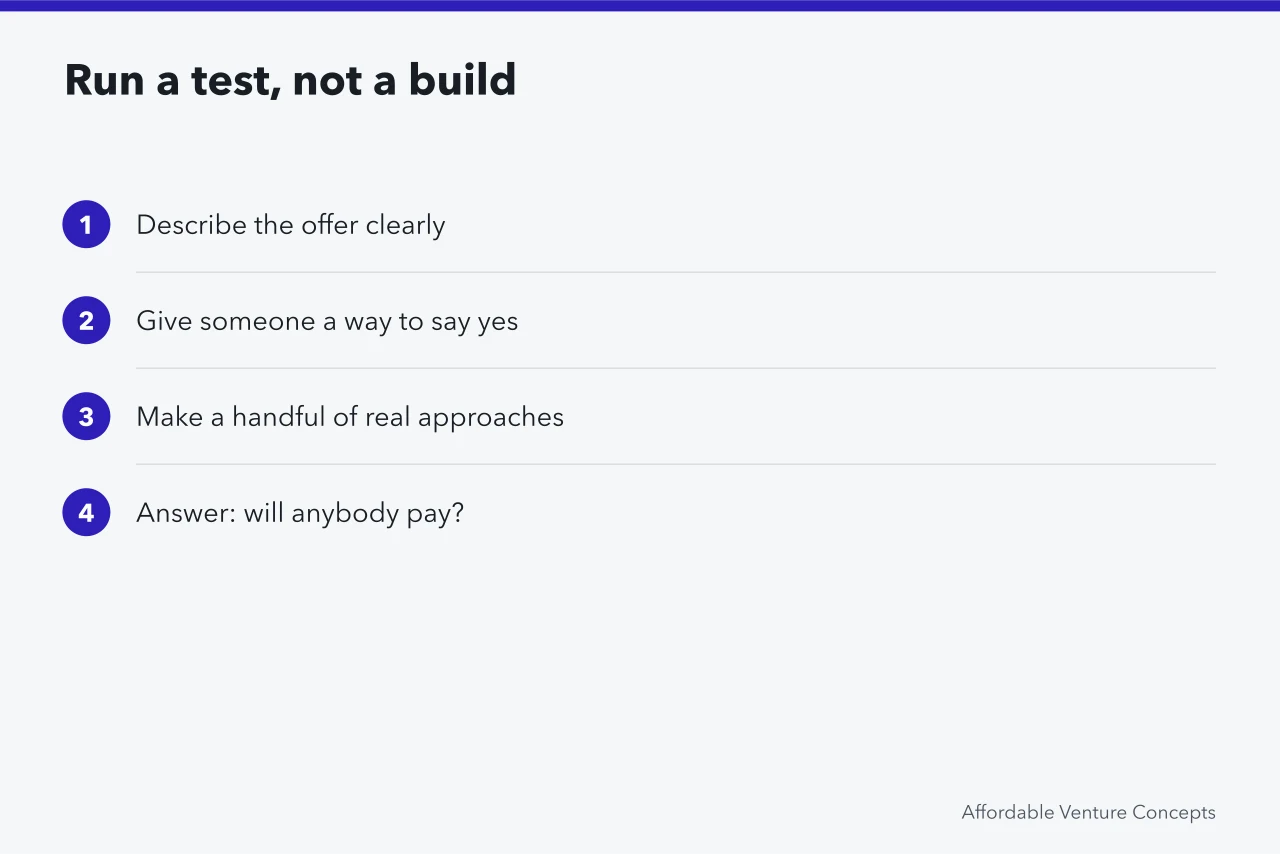
The first weeks answer one question: will anybody pay for this? A description of the offer, a way for someone to say yes, and a handful of real approaches answer it faster than a term of building.
The SBA's outline of market research and competitive analysis describes the wider version of the same work. The guide to online business ideas covers how to run the test when the buyers are not in front of you.
Where the buyers are on campus or nearby, the test is easier and the answer arrives faster, which is one genuine advantage of starting here.
Use the network you were given
A student venture's largest asset is a dense group of people who are easy to reach and share a context. Ask each person directly, not by broadcast. Ask for an introduction, not a purchase.
That network reaches staff, alumni, and societies. Use it deliberately while you are inside it. It gets much harder to reach the year after you leave.
Handling the money from the first payment
Keep business money separate from personal money from the first payment. Track what came in, what went out, and when.
Income from a venture is usually reportable somewhere, and student status rarely changes that. The IRS overview of what starting a business involves is one country's version of the obligations that attach as soon as there is income. Find the equivalent for your own country and ask before the first payment rather than after the first year.
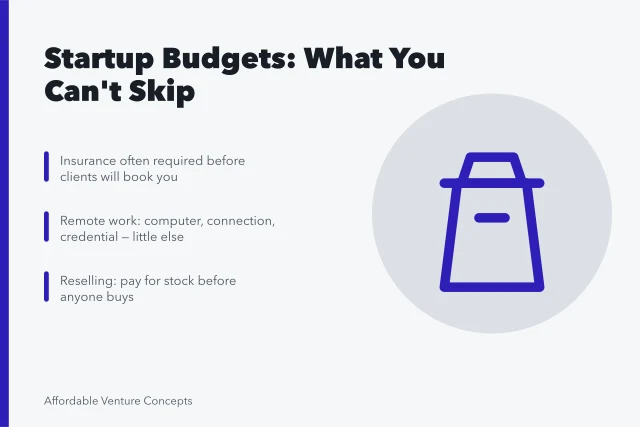
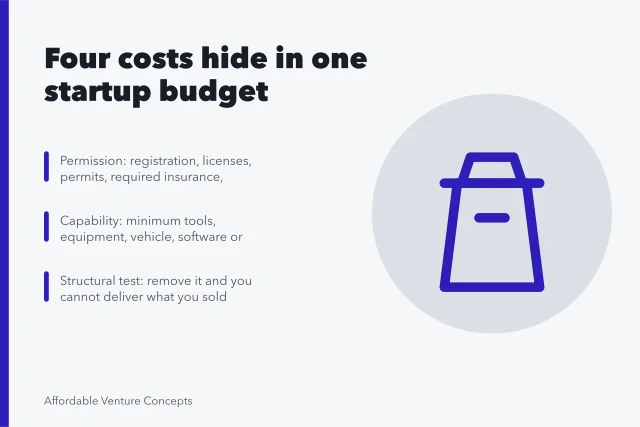
Put a share of every payment aside for tax from the beginning. The habit is easier to start than to retrofit. It also helps to sort spending the way the guide to ideas by startup budget does, into money that leaves whether or not anyone buys and money that follows a sale.
Commitments to refuse
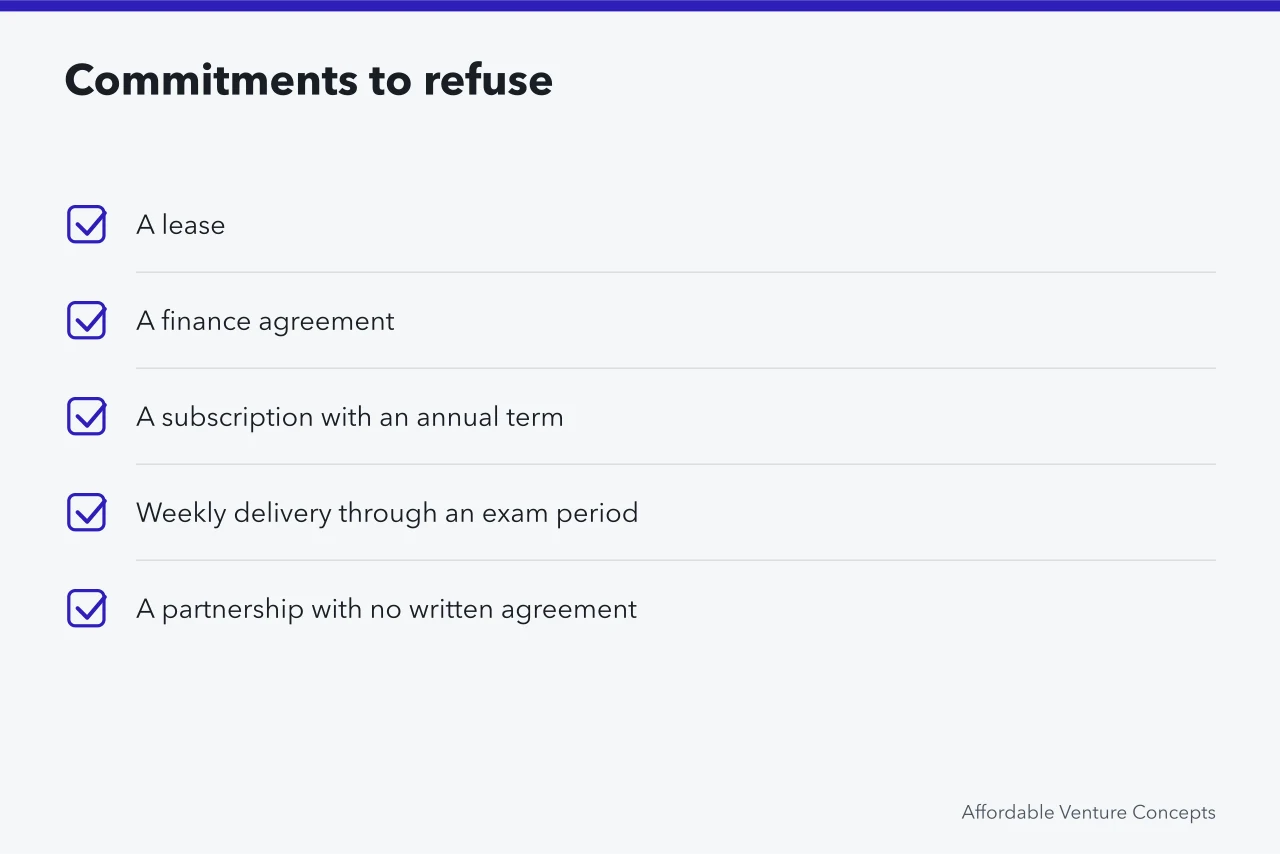
Anything that continues past your control over your own circumstances. A lease. A finance agreement. A subscription with an annual term. A promise of weekly delivery through an exam period. A partnership with no written agreement about what happens if one of you leaves.
Irreversible spending is the category to delay longest, and a student has a harder version of that rule, because your address and your availability are both scheduled to change.
The graduation decision
Set the terms now. There are only three honest outcomes, and each is respectable.
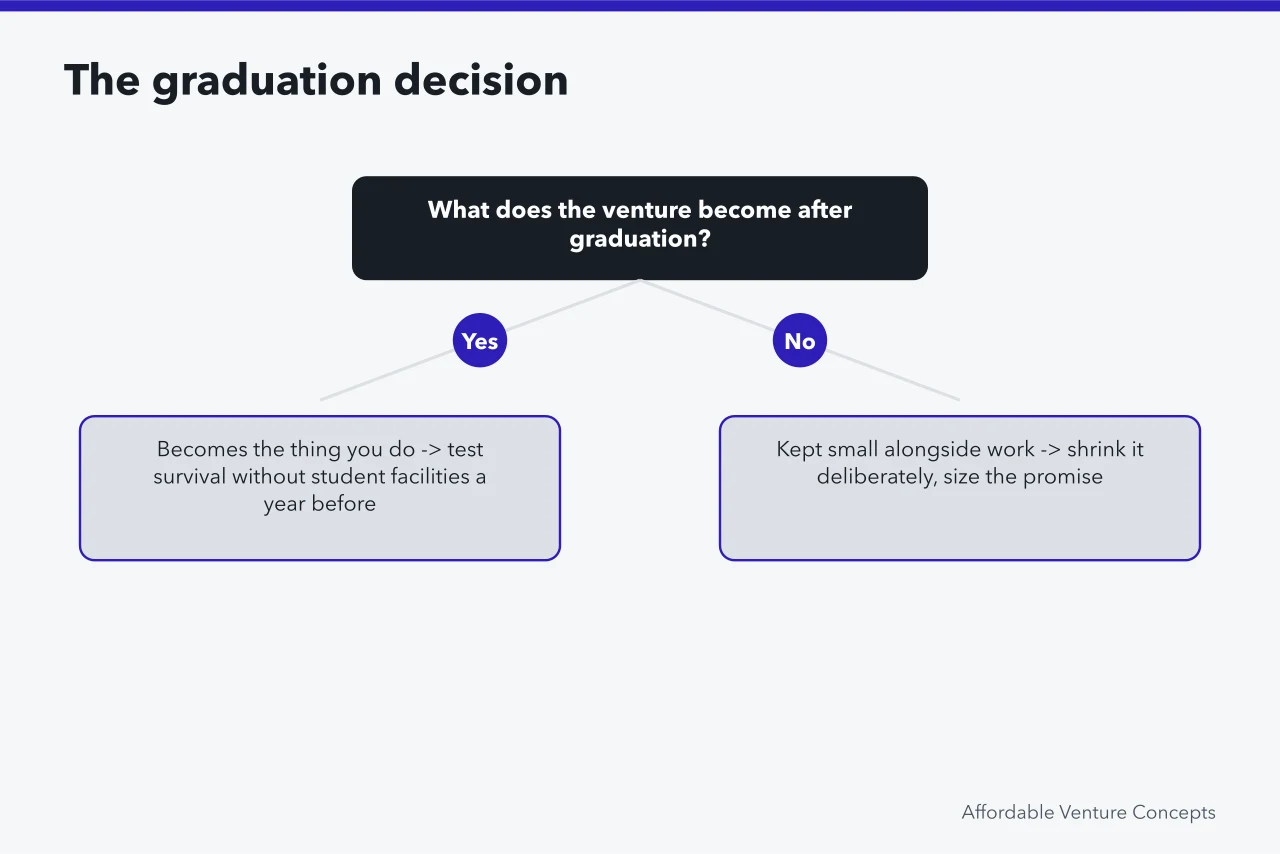
It becomes the thing you do, in which case it needs to survive the loss of student facilities, student pricing and the campus network, and you should test that a year before it happens.
It becomes something you keep small alongside work, in which case shrink it deliberately rather than letting it fade, and the guide to part-time ideas covers how to size a promise around a job.
It ends, in which case end it properly: tell customers, finish what is owed, close the accounts, and keep the record. A venture that taught you how to sell something has already paid for itself.
Common questions
Should I start a venture in my first year or wait?
There is no general answer, but the constraint is rarely the year. It is whether you have the permission questions settled and a phase of the calendar to run a test in.
Does a venture look good to employers?
Some employers value it and some do not notice, and neither is a reason to start one. Start it because you want the thing it produces.
Can I use university equipment or software?
Read the policy, and assume the answer is no until it says otherwise. Institution licenses are frequently limited to study, and using them for paid work can breach both the license and the student rules.